Mar
29
2013
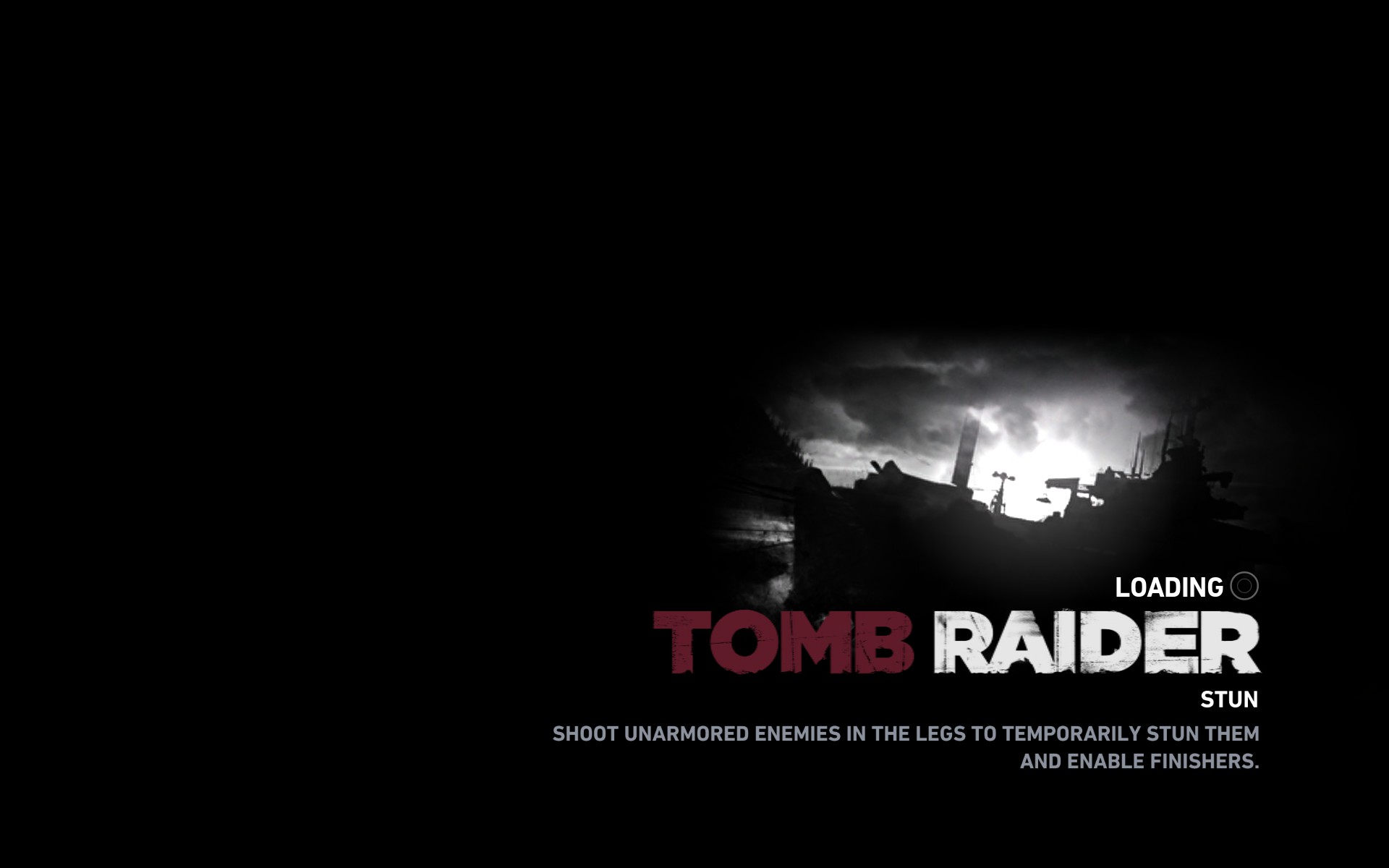
Dating back to 1996, Tomb Raider is one of video gaming’s grand old franchises. It has never quite played by anyone else’s rules, and has always been a bit of an “also-ran”; garnering lots of fans, but never quite hitting the staggering successes of other similarly well-known franchises. But it’s always been interesting to see what the latest set of experiments have been; when you dive into a Tomb Raider game, it’s probably not going to be a lot like what all the currently trendy games are doing. So let’s take a look.

Okay, this is interesting. Right away they move into awkward territory; let me first explain that the black and white landscape image which is visible here is a static image; it doesn’t animate. However, it does slide left and right on the screen. Assigning a base score for this is awkward; According to our scoring standards, if the loading screen has a flat black backdrop, that’s worth one point. If it’s a static image, that’s two points. If it’s smoothly animated, that’s four points. So how do we score this screen which is mostly flat black, but has a static image that smoothly slides around on it?
Continue reading
posted in PC, PlayStation 3, XBox 360
Mar
29
2013
BioShock Infinite is the latest release from Irrational Games, the third game in their BioShock label, which is the latest label in their “Shock” label. Irrational Games had previously worked on BioShock, but not BioShock 2. (this inverts their earlier work on “System Shock 2″, but not “System Shock”)
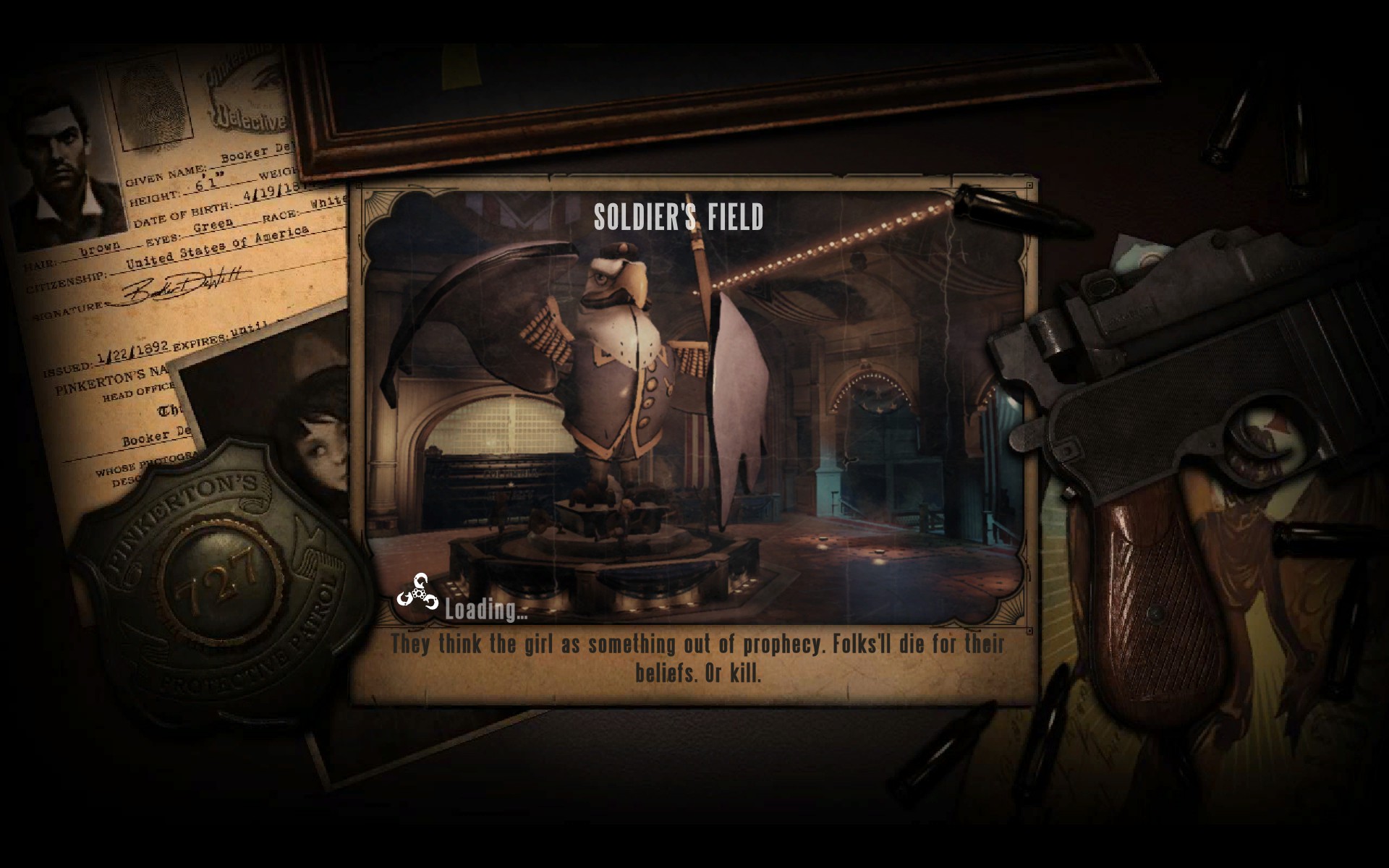
BioShock Infinite has been getting a lot of press for its visuals, its methods of storytelling, and its character interactions. No one, however, has discussed that one other critical aspect of any game: its loading screens.

The game’s standard loading screen depicts a static backdrop, with the name of the location being travelled to at the top, and a small text note underneath. According to our objective loading screen scoring metrics, a static, representational background image gives the loading screen a base score of two points. The text at the bottom of the screen is generally not particularly interesting, except (as in this case) where it’s spoiling the game’s own plot by revealing details which had not yet been revealed within the game yet — so no bonus points are awarded for it. Long-time readers and loading screen aficionados will no doubt also have noticed the “Loading” text (0.5 penalty points) and the symbol beside it, which is a loading spinner (1 penalty point).
But this isn’t the game’s only loading screen. There’s another one as well, which perhaps gets less notice, but which we need to take into account for the final score.
Continue reading
posted in PC, PlayStation 3, XBox 360
Aug
20
2009
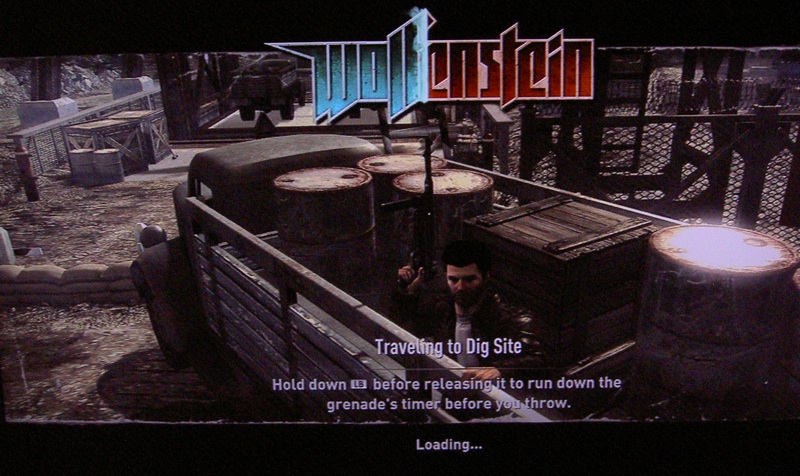
Wolfenstein is one of the oldest game franchises still actively being developed. The first game in the series, Castle Wolfenstein, was released in 1981, on the Apple ][ computer (and later was also available for the PC, the Commodore 64, and other computers of the era). This game and its sequel were both stealth games before stealth games were cool, but when id software came along in 1992 and made Wolfenstein 3D, the stealth aspects of the game were dropped, the action elements enhanced, and the FPS genre was born.
It’s interesting to note that it also wasn’t until id software came along in 1992 and made Wolfenstein 3D that a load screen was added to the game. And with that effortless segway, let’s talk about the loading screens for the latest entry in the series, simply entitled: Wolfenstein.

Score and full review are beneath the fold.
Continue reading
posted in PC, PlayStation 3, XBox 360
Jun
25
2009
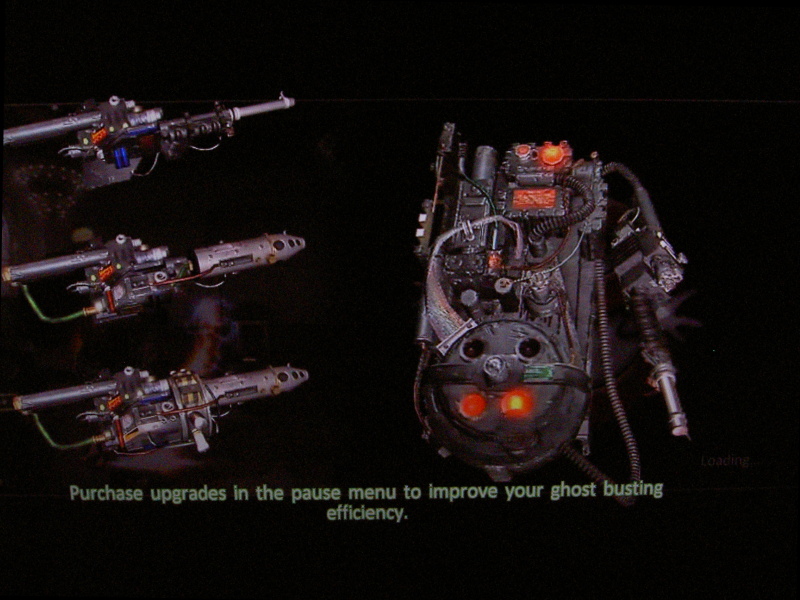
The first Ghostbusters movie was released in 1984, and in the following 25 years, there was not a single Ghostbusters-licensed game to include a loading screen. Until now. At long last, Mr. Aykroyd has seen fit to provide one, and we’ve seen fit to review it for you, the discriminating aficionado.

Full review beneath the fold.
Continue reading
posted in PC, PlayStation 3, XBox 360
Mar
7
2009
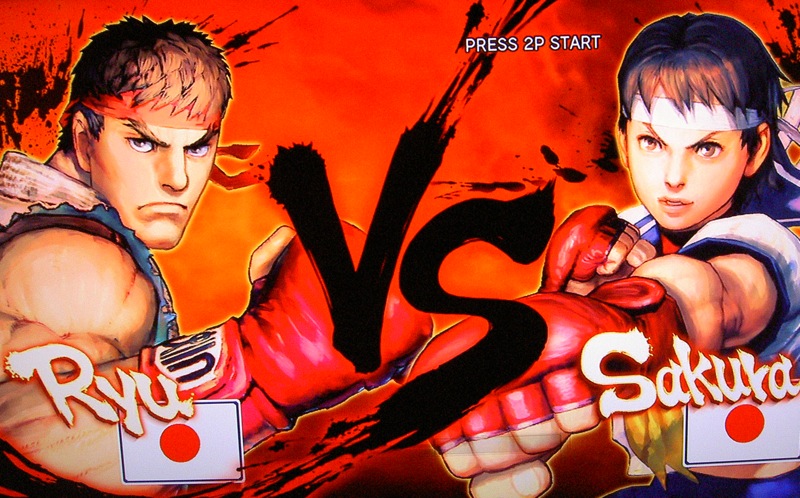
Street Fighter 4 is the 14th iteration of the Street Fighter series, and the fifth major new version of Street Fighter (the earlier 3D ‘Street Fighter EX’ series, oddly enough, was never given its own number).
Street Fighter 4 is a great new release to look at, as its roots are in the era where games were burnt into ROM chips, and data access times were so low that loading screens were never really necessary. In the coin-op arcade versions, of course, there were short “Character vs. Character” splash screens to announce the fights, and as games have moved from fast chip storage to slow disc storage, these splash screens have typically become used as the load screens, and this is the case here. Mostly.

Full review beneath the fold.
Continue reading
posted in PC, PlayStation 3, XBox 360
Dec
17
2008
I want to clarify something very quickly, here. This review of Prince of Persia is a review of the 2008 game “Prince of Persia”, brought to you by UbiSoft Montreal, not of the 1989 game Prince of Persia, by Jordan Mechner.
Prince of Persia makes a nice change from all the complicated multiple-load-screens-in-one-game that we’ve been seeing lately; it’s a nice return to the heady days when games had only a single load screen which was good enough for every purpose.

Keep reading for the full review.
Continue reading
posted in PC, PlayStation 3, XBox 360
Dec
1
2008
Fallout 3 is the sequel to Fallout 2, which was the sequel to Fallout 1, which was a bit of an homage or remake of the earlier game Wasteland, which was a science-fiction version of the then-popular Ultima series which was being made by Origin Systems, which.. okay, I’ll stop now.

Fallout 3's initial loading screen
Full review beneath the fold.
Continue reading
posted in PC, PlayStation 3, XBox 360